Malaysia Software Solutions Provider

A Good Distribution solution integrates people & technology to generate efficiency

Solution Overview

Distribution in Malaysia

Wholesale distributors are facing challenges in managing diverse product inventories due to supply chain disruptions caused by the pandemic, coupled with increasing demands from customers for shorter delivery windows and full transparency across the process. Traditional paper-based manual systems can lead to data duplication and errors, which can be detrimental to businesses operating on tight margins. To overcome these challenges, solutions such as implementing digital inventory management systems and utilizing automation technologies can help streamline processes and reduce errors.

icon-p2

>30 manufacturing customers across ASEAN

icon-p4

20 years of manufacturing experience

icon-p3

SME specialization

icon-p5

Discreet and Non discreet manufacturing

icon-p1

Manufacturing with smart integrations

Fundamental Modules for Distribution

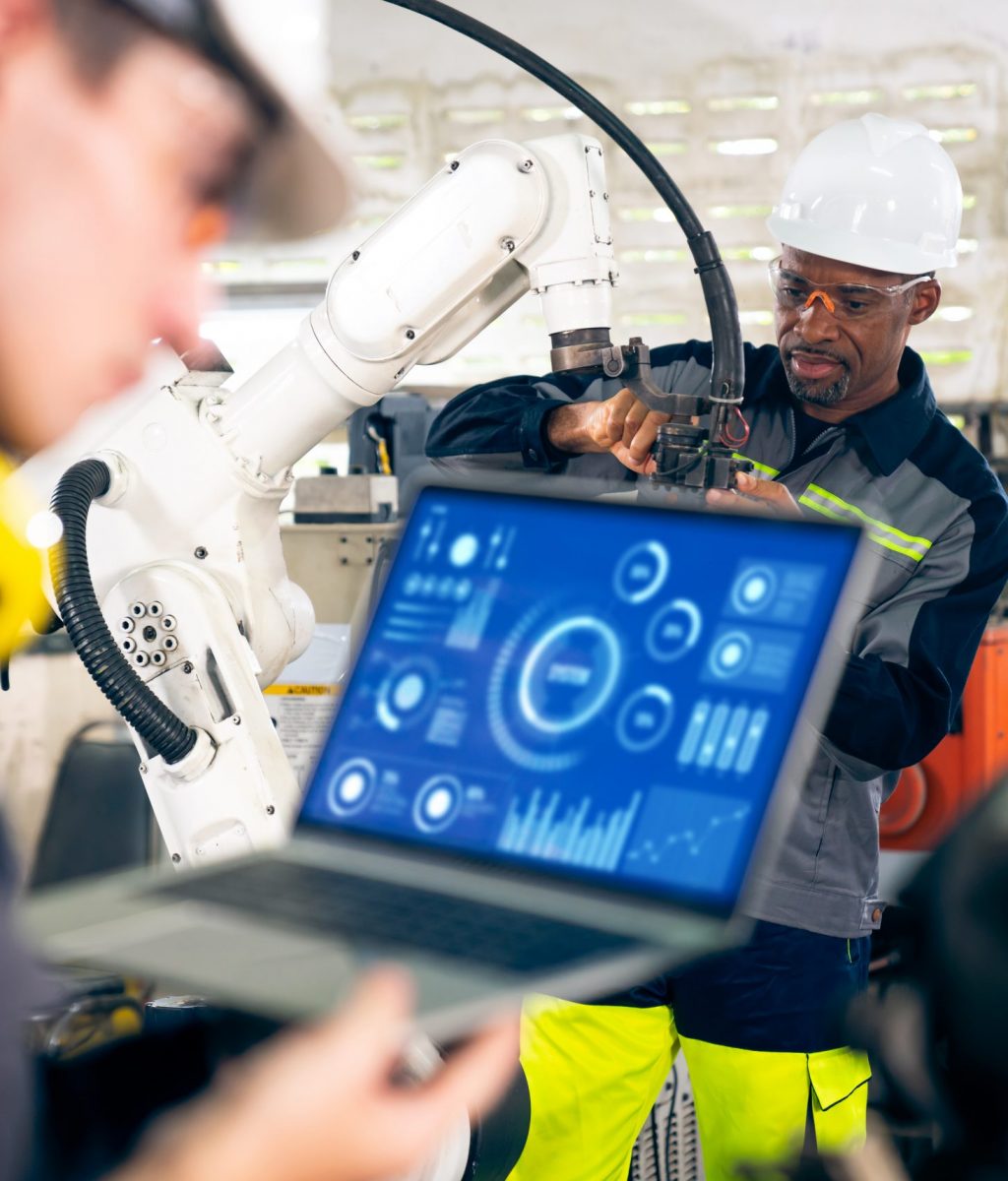
Young factory worker working with adept robotic arm

Warehouse Management System (WMS)

Pronto Xi Warehouse Management provides a range of tools that maximize planning warehouse throughput and customer service with warehouse management system (WMS), which intelligently controls inventory movement into, around and out of warehouse.  Here are key features:


Picking Processes

Process Rules

Replenishments

Item Information

Putaway

Locations & Zones

Delivery Requests

Order Picking

Wave Picking

Smart Dispatch

Bill of Materials BOM

The bill of materials supports up to 50 levels of sub assembly bill of structures required to produce the parent assembly. Different types of bill can be built to meet product lifecycle. The BOM solution also delivers cost roll-up production factory, and where the same BOM exists across multiple factories.

Shopfloor

The bill of materials supports up to 50 levels of sub assembly bill of structures required to produce the parent assembly. Different types of bill can be built to meet product lifecycle. The BOM solution also delivers cost roll-up production factory, and where the same BOM exists across multiple factories.

Work orders are typically used to manage the planning, execution, raw materials consumption and feedback of production results.

In a lean manufacturing environment, Pronto Xi offers orderless and paperless recording of production, using backflush methods for raw materials consumption and progressive crediting of labour and overhead “hours earned”.

Special work order types and processes are available for disassembly-type industries and other special operations such as rework, repack and others.

Production results can be recorded using standard production feedback tools, or one of a large number of industry-specific production entry methods.

Shopfloor Manufacturing allows you to select a specific route from a predefined range on the day of actual production. Changes to the route ID can also be made against an open work order, whether at “firm planned” or “committed” status. This gives greater flexibility if quick changes to individual word orders are needed when production has not yet commenced. Lot, batch and serial tracking are supported for finished goods as well as components or raw materials.

Scheduler

Oversee what is getting done and who is doing it to make sure you have got the right hands in the right places.

Smart Distribution Integration

  • Mobile Sales Order

  • Barcode Scanning

  • RPA

  • IOT

Benefits

Smart Manufacturing requires a strong and integrated ERP system. Both Infor M3 and Pronto Manufacturing are capable to extend its smart integration to our advanced application.

  • Mobility increases the capabilities to track production anywhere and anytime
  • IOT improves the visual performance of your machinery, which in return help to monitor your performance of output production.
  • RPA helps to automate your application processes to streamline your process in manufacturing
  • Analytics provides and understanding of data towards your production input and output
  • Supply Chain Optimization further improves the capabilities of your production from demand planning to inventory optimizing within the given constraints.
workshop-assembring-televisions-min

Customers In Manufacturing

Distribution ERP FAQs

1. What is a Distribution ERP and why does my business need it?

A Distribution ERP is an enterprise software system tailored to distributors, wholesalers and logistics operations covering modules like inventory management, purchasing, warehouse operations and order fulfilment. According to our site, distributors face challenges such as managing diverse inventories, supply-chain disruptions and customer demands for shorter delivery windows.

By adopting a Distribution ERP, you can reduce manual errors, streamline operations and improve visibility across your distribution network.

2. Which core modules should a top-tier Distribution ERP include?

The key modules we recommend for a Distribution ERP include:

  • Warehouse Management System (WMS) – features like put-away, wave picking, smart dispatch.
  • Inventory & Stock Control – manage lots, batches, locations & zones.
  • Order Management & Fulfilment – from customer order to dispatch.
  • Purchasing & Supplier Management – to ensure stock availability and cost control.
  • Analytics & Supply-Chain Optimisation – to drive smarter, data-driven decisions.
3. Why should I choose us for a Distribution ERP implementation?

We bring local Malaysian market expertise and proven experience in distribution systems. On our distribution page we highlight awareness of challenges like manual paper-based systems, data duplication and tight margins for distributors in Malaysia.

Our approach ensures your Distribution ERP is tailored for your operations, with modules and workflows aligned to your business context and supported by our team.

4. How does our Distribution ERP help improve supply-chain performance and delivery for my distribution business?

By implementing our Distribution ERP, you can achieve:

  • Better inventory accuracy and visibility, reducing over-stocking or stock-outs. 
  • Faster order processing and fulfilment due to integrated warehouse & dispatch modules.
  • Optimised warehouse flows (put-away, picking, zones) that reduce cost and time. 
  • Smart integrations (mobile order-entry, barcode scanning, IoT) to enhance responsiveness and throughput. 

These improvements translate to better customer service, lower operational cost and stronger competitive advantage.

5. How do I begin the journey to implement our Distribution ERP?

Here’s how we help you get started:

  • Reach out to us for a discovery session to assess your current distribution processes, systems and pain points.
  • We map your workflow and define the modules and configuration you need for a Distribution ERP.
  • We plan the deployment—configuration, data migration, training, go-live.
  • We offer ongoing support to ensure your ERP continues to deliver and scale with your business.

Starting with a clear roadmap and partnering with us ensures your transition to a Distribution ERP is successful and sustainable.